

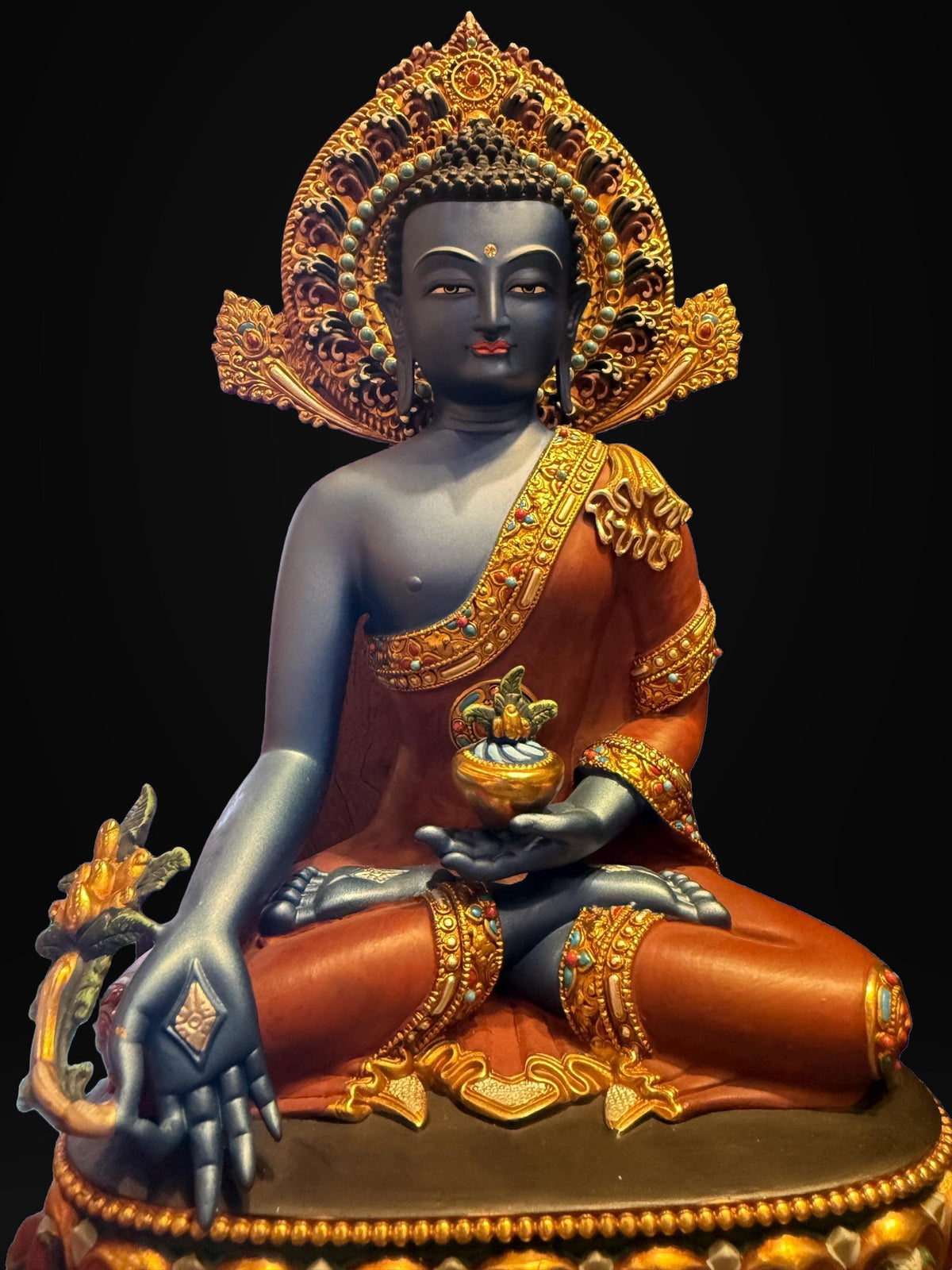
Turn a Tibetan or Nepalese metal statue upside down and you will often find that it is hollow, with a separate plate across the base. That opening is there for a reason. In Tibetan Buddhism a statue is traditionally filled and then consecrated before it is placed on a shrine. This guide explains the basics in plain terms.
Why statues are hollow
Most metal statues are cast hollow, which keeps them lighter and allows the inside to be filled. The base is closed with a metal plate. Some plates are fixed in place; others are removable or left loose so that the statue can be filled later.
What filling (zung) means
The Tibetan word zung (gzungs) refers to the mantras and dharani texts placed inside a statue. Commonly, a filling includes:
- Rolls of printed mantras, wrapped tightly and placed according to the parts of the body.
- A central wooden stick, often called the "life tree" (sokshing), running up through the figure.
- Other offerings, such as incense powder, grains, herbs or small precious substances.
The exact contents and the way they are arranged vary between traditions and teachers. Filling is usually done by monks or trained practitioners, because the order and orientation of the mantras matter.
What consecration (rabne) means
After filling, a lama performs a consecration ritual, called rabne (rab gnas). The common explanation is that this invites the presence of the deity into the image, so that the statue becomes a support for practice rather than only a work of art.
Nepalese statues in our shop
Hand-finished copper and brass statues from Nepal. See all in Buddha Statue.


The base plate and the double vajra
When a statue has been filled, the base plate is sealed in place. The plate is very often engraved with a double vajra (vishvavajra), a crossed vajra that is commonly said to stand for stability and protection, which is why it is placed on the foundation of the image. Seeing a double vajra on a plate does not by itself mean a statue has been filled; it is also a standard decoration on new, empty statues.
Do you have to fill your statue?
No. Many people keep an unfilled statue on a home altar or simply as sacred art, and treat it with respect. Others, especially practitioners, prefer to have it filled and consecrated. Both are common. Unless a product page states that a statue has been filled or consecrated, assume it comes empty.
If you want it done
- Ask a local Tibetan Buddhist centre or monastery. Many offer filling and consecration, or can tell you who does.
- Keep the base plate and any screws. They will be needed to seal the statue.
- Bring the statue clean and dry, and say which deity it is if the figure is unfamiliar.
- Allow time. Larger statues take longer to fill; a figure of about 30 cm (12 in) holds many more mantra rolls than one of 10 cm (4 in).
Handling a statue respectfully
Lift a statue by its base rather than the head or raised hands, keep it off the floor, and place it on a clean, raised surface. Avoid opening the base of a statue once it has been filled and sealed.


