

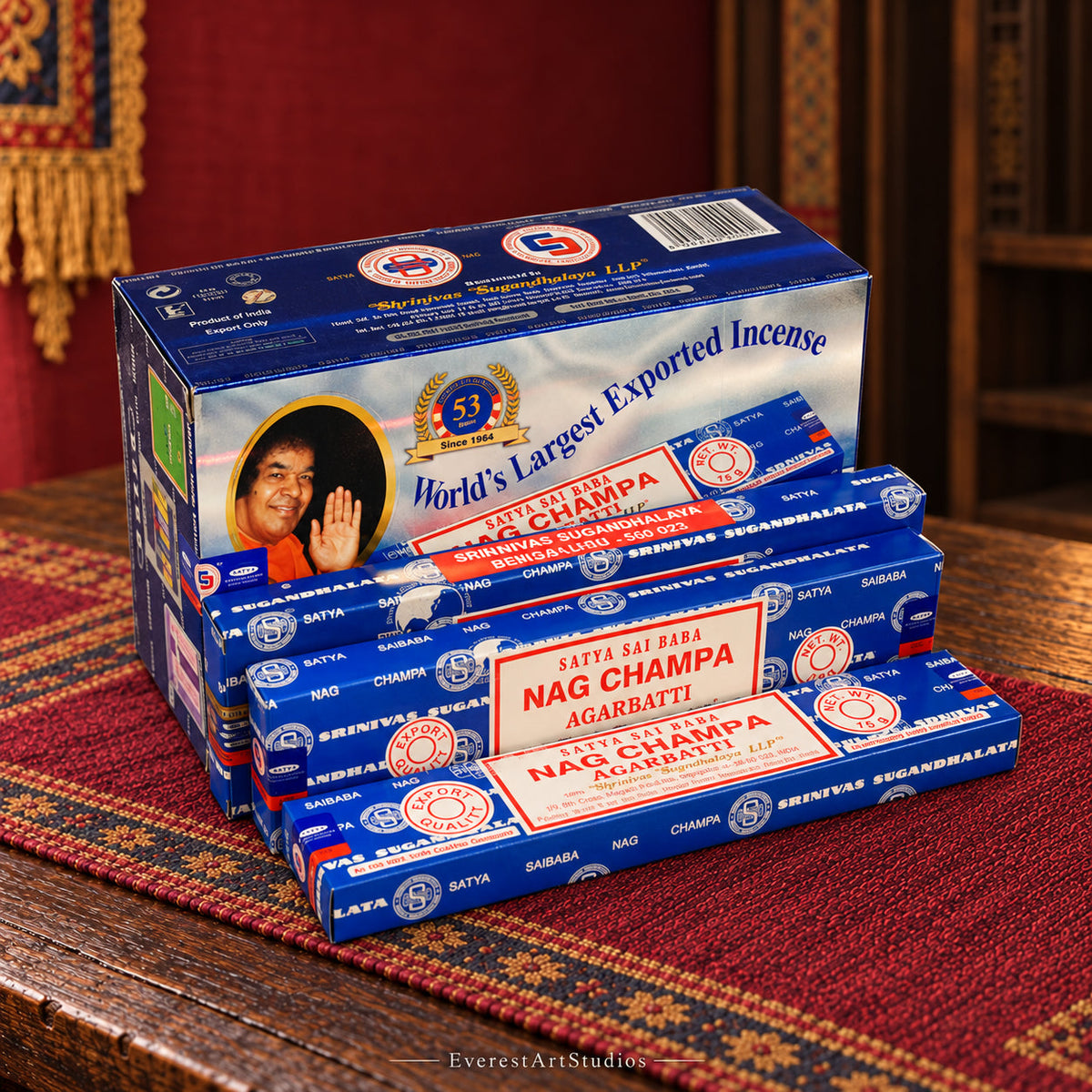
Nag Champa is one of the most recognised incense scents in the world: sweet, warm and slightly powdery, over a soft sandalwood base. If you have walked into a yoga studio or a shop selling Himalayan goods, you have probably smelled it. This guide explains what Nag Champa is, how it differs from other incense, and how to choose between sticks, cones and dhoop.
What is Nag Champa?
Nag Champa is a fragrance style from India rather than a single plant. The name is commonly linked to the champak flower (Magnolia champaca), and the blend is usually described as sandalwood combined with a floral note such as champak or frangipani. Many traditional recipes also used halmaddi, a soft tree resin that gives the paste a slightly sticky feel. Recipes vary between makers and are rarely published in full, so treat these ingredients as a general description of the style, not a list for any one box.
The best-known version is Satya Sai Baba Nag Champa, sold in the familiar blue box. Its sticks are made in the masala style: a paste of powdered aromatic material is rolled onto a thin bamboo core, rather than a plain stick simply being dipped in perfume oil.
How it differs from Tibetan incense
Tibetan incense is usually coreless and made mainly from herbs and woods, with an earthier, drier scent. Nag Champa is sweeter and more perfumed, burns on a bamboo stick and fits a standard stick holder. Neither is better; they suit different tastes. Our guide to Tibetan vs Indian incense compares the two in more detail.
Nag Champa in the shop
Classic Satya sticks, cones, dhoop and dual-fragrance boxes. Browse more in All About Incense.


Sticks, cones or dhoop?
Sticks
The classic format. Satya packs are sold by weight rather than stick count, most often in 15 g (0.53 oz) boxes, with larger 40 g (1.41 oz), 100 g (3.53 oz) and 250 g (8.82 oz) packs. Our Sai Baba Nag Champa listing gives a stick length of about 20–22 cm (7.9–8.7 in), so choose a holder with a small hole for a thin bamboo stick and an ash catcher at least that long.
Cones
Cones release a stronger burst of scent in a shorter time and suit small rooms. Burn them on a heat-resistant dish or in a cone burner; see how to burn incense cones.
Dhoop
Dhoop are short, thick sticks with no bamboo core. They give a dense scent and need a dhoop holder or a dish of sand. More in what is dhoop incense.
How to choose
- Trying it for the first time: a single 15 g (0.53 oz) box of classic Nag Champa is the easiest way to find out whether you like it.
- Already a fan: the 40 g, 100 g or 250 g packs (1.41, 3.53 or 8.82 oz), or the carton of 12 × 15 g boxes (180 g / 6.35 oz), suit daily use.
- Want to compare scents: a dual-fragrance box pairs Nag Champa with Sandalwood or Dragon's Blood, 8 g (0.28 oz) of each, 16 g (0.56 oz) in total.
- Buying a gift: pair one box with a simple stick holder so it can be used straight away.
Burning and storing it well
Light the tip, let it flame for a few seconds, then blow it out gently so it smoulders. Burn it on a heat-resistant surface in a ventilated room, away from curtains, children and pets, and never leave it unattended. Keep boxes closed, dry and out of direct sunlight so the scent stays fresh.
Nag Champa is often burned during meditation, prayer or yoga to mark a quiet moment. A common explanation is that the familiar scent helps signal the start of practice; how it feels is personal, and no particular effect is promised.


