

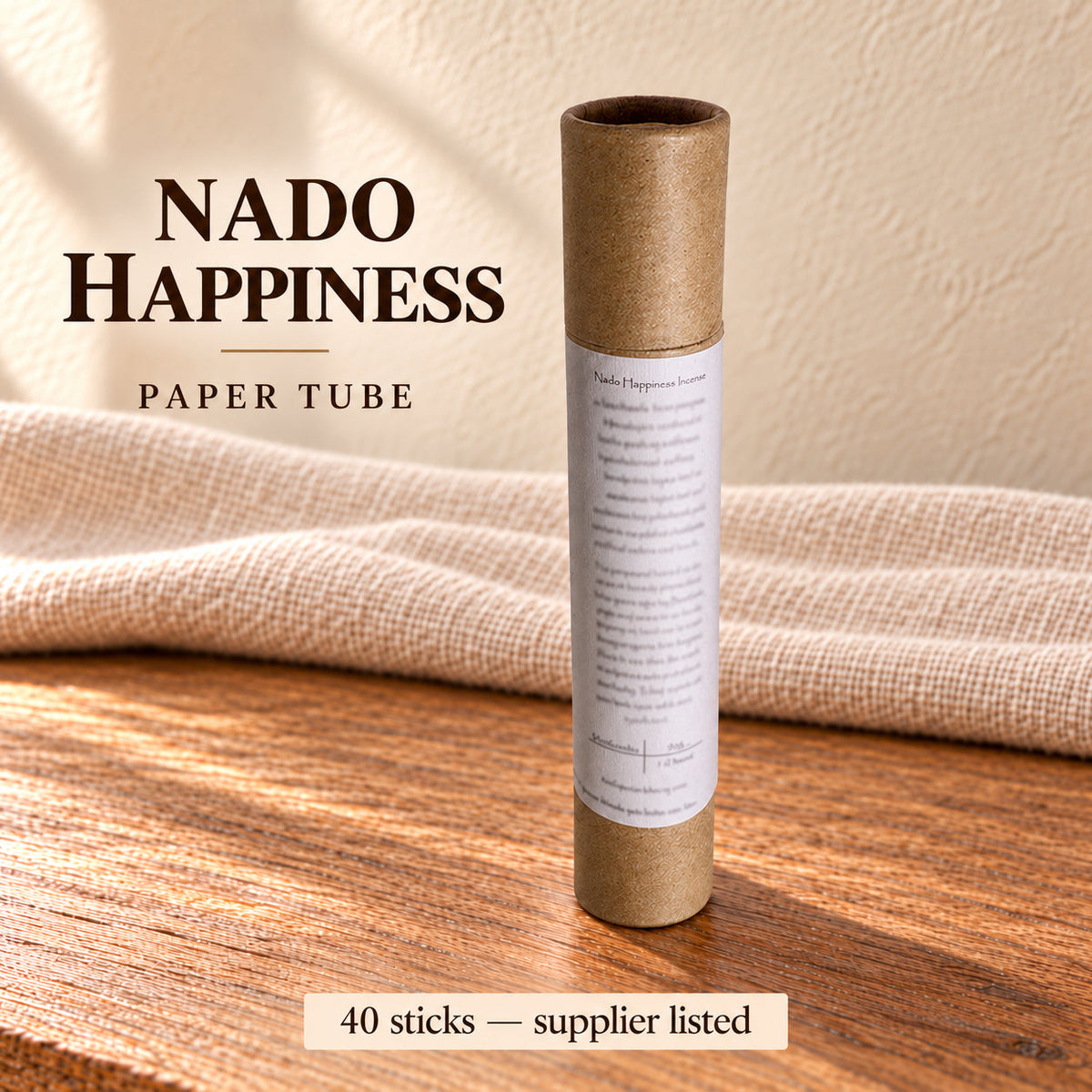
Bhutan has its own incense tradition, closely related to Tibet’s but with a character of its own. If you have seen the name NADO on a paper-wrapped bundle and wondered what it is, this guide explains where it comes from, how it compares with Tibetan incense, and how to choose a pack.
What is Bhutanese incense?
Like Tibetan incense, Bhutanese incense is usually coreless: the whole stick is a dried paste of powdered plants, with no bamboo inside. Incense is part of daily household offerings in Bhutan, and recipes are commonly said to follow traditional Buddhist texts closely.
The best-known maker is NADO Poizokhang in Thimphu, often described as the oldest handmade incense-stick maker in Bhutan. In an interview with Bhutan’s tourism council, the company explained that each incense uses around 40 materials, including roots, leaves, fruits, bark and spices such as cardamom, cloves, cinnamon, nutmeg and saffron, many gathered in the high Himalaya. Exact formulas are not published, so treat this as a description of the tradition rather than an ingredient list for any one pack.
How it differs from Tibetan incense
- Scent: both are herbal and woody. Many people find NADO blends a little warmer and spicier, with sweet notes such as cinnamon and clove, while many Tibetan blends lean earthier and drier.
- Form: both are coreless and usually thicker than Indian sticks, so they need a holder with a wider hole or a bowl of sand.
- Packaging: Bhutanese incense is often sold in simple paper wraps, kraft cartons or bamboo tubes.
For more on Tibetan styles, see our guide to types of Tibetan incense.
Bhutanese incense in the shop
NADO packs in several lengths and scents. Browse more in All About Incense.


How to choose
By length
- Short sessions: NADO Special Guru Zimpoe sticks are about 12 cm (4.7 in) long, and the short Cinnamon bamboo tube holds sticks of about 11 cm (4.3 in).
- Everyday: most NADO packs are around 21–22 cm (8.3–8.7 in). The Green Tara carton holds 40 sticks of about 22 cm (8.7 in), 5 mm (0.20 in) thick.
- Long rituals: the long ritual pack holds 40 sticks of about 41 cm (16.1 in), 4.5 mm (0.18 in) thick, for extended practice or larger rooms.
By scent and packaging
Cinnamon is a good first choice if you like warm, sweet spice. Deity-named packs such as Green Tara follow the same naming custom as Tibetan incense; our guide to deity names on incense explains what these names usually mean. Bamboo tubes protect the sticks well and make a tidy gift.
Burning coreless incense
Because there is no bamboo core, sticks of 4.5–5 mm (0.18–0.20 in) need a holder with a wider hole, or can stand in a bowl of sand or ash. Light the tip, let it flame briefly, then blow it out so it smoulders. Burn on a heat-resistant surface in a ventilated room, away from children and pets, and never leave it unattended. Keep unused sticks wrapped and dry, as coreless incense can snap easily.


