

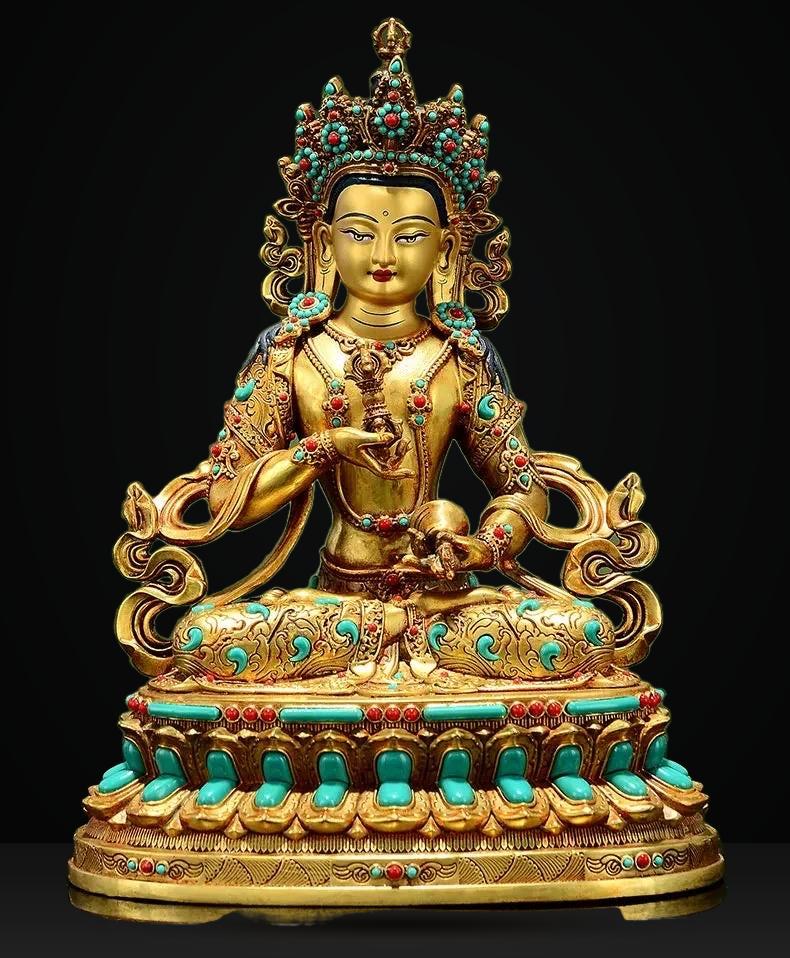
Two statues of the same figure can look and age very differently because of the metal and finish. Here is what the common terms mean and how to care for each.
Brass
Brass is an alloy of copper and zinc. It has a golden-yellow colour and is a common material for cast statues. Over time it darkens to a soft brown, and many people like that aged look. Some brass statues are given an antique finish from the start.
Copper
Copper is redder than brass. Nepalese workshops often cast statues in copper because it takes fine detail and holds gilding well. Left uncovered, copper also darkens with age.
Gilded
A gilded statue has a thin layer of gold over the metal. Full gilded means the whole figure is covered. Partly gilded means only some areas, such as the robe, are gold, with the base metal left visible elsewhere for contrast. Faces are often finished by hand with gold and painted details.
Silver-plated
Silver-plated statues have a thin silver layer, often over white copper, an alloy with a pale, silvery colour. Silver gives a cool, bright look. It can tarnish over time, especially in humid air.
Painted
Some statues are painted in colour, especially wrathful protectors. The paint is part of the finish and is more delicate than bare metal.
Three finishes from our collection
Gilded copper, silver-plated and brass statues. See all Buddha statues.


Caring for any statue
- Dust regularly with a soft, dry brush or cloth.
- Do not use water, metal polish or household cleaners on gilded, painted or plated surfaces. They can remove the finish.
- Avoid rubbing painted faces.
- Keep statues out of direct sun, and do not let incense smoke drift straight onto them, as it leaves a film over time.
- On natural brass or copper, a dry polishing cloth can brighten the surface if you prefer a lighter look. Many people leave the aged colour as it is.
Handle a statue with clean, dry hands, holding it by the base rather than the head or raised arms.


