

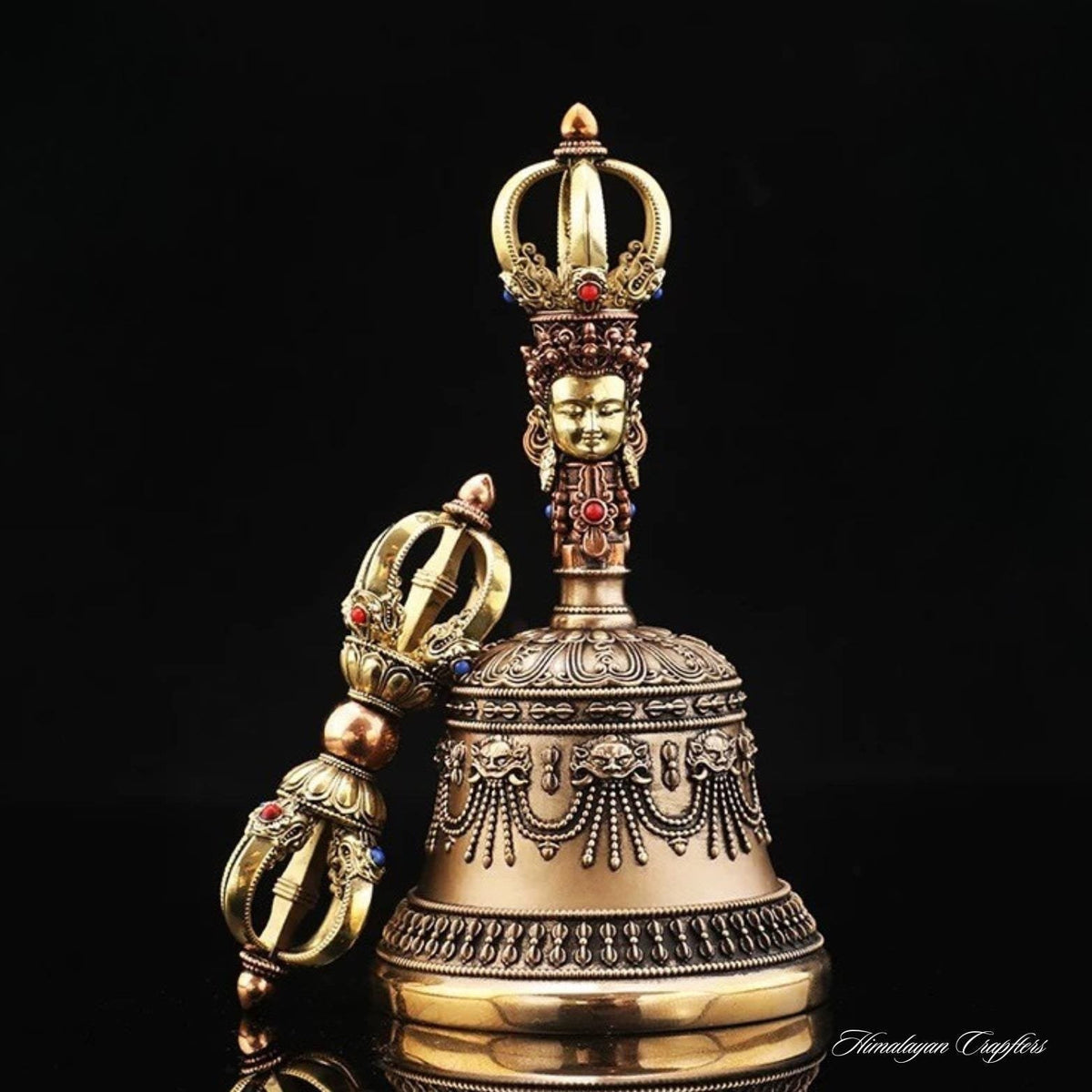
In Tibetan Buddhist practice the vajra (dorje) and bell (drilbu) are used as a pair. The vajra is held in the right hand and the bell in the left. They are commonly explained as compassion or skilful means, represented by the vajra, joined with wisdom, represented by the bell.
Five or nine prongs
The prongs are the curved arms at each end of the vajra. The bell handle is topped with half a vajra that matches it.
- Five prongs are the most common. They are often linked to the five wisdoms and the five Buddha families.
- Nine prongs are used particularly in the Nyingma tradition.
If you have a teacher, ask which one your practice uses. If you want a set mainly for the altar or as a reminder, a five-pronged set suits most people.
Size
- Hand sets, with a bell around 15 to 20 cm (6 to 8 in) tall: the usual size for ritual use. Comfortable to hold and loud enough for a room.
- Small sets: good for a travel altar or display, but the sound is higher and shorter.
- Large sets: impressive on a shrine, heavier to hold for long.
Hold the vajra in your palm. It should sit comfortably between the fingers without slipping.
Vajra and bell sets from our collection
Handmade brass sets in five and nine-pronged styles. See all vajra, bell and phurba pieces.


Sound
A good bell gives a clear tone that rings on for several seconds after it is struck or swung. The sound depends on the alloy, the thickness of the walls and how well it was cast. If you can, listen to a recording of the bell before buying. A dull or rattling note usually means a thin or poorly cast bell.
Details to look at
The prongs should be even and symmetrical. The bell often shows a face on the handle, commonly explained as the wisdom goddess Prajnaparamita, and rows of small vajras or lotus petals around the shoulder.
Care
Wipe the set with a soft, dry cloth after use. Keep it in a cloth bag or box so the bell rim is not dented, and set the bell down gently, mouth downward, on a soft surface.


