

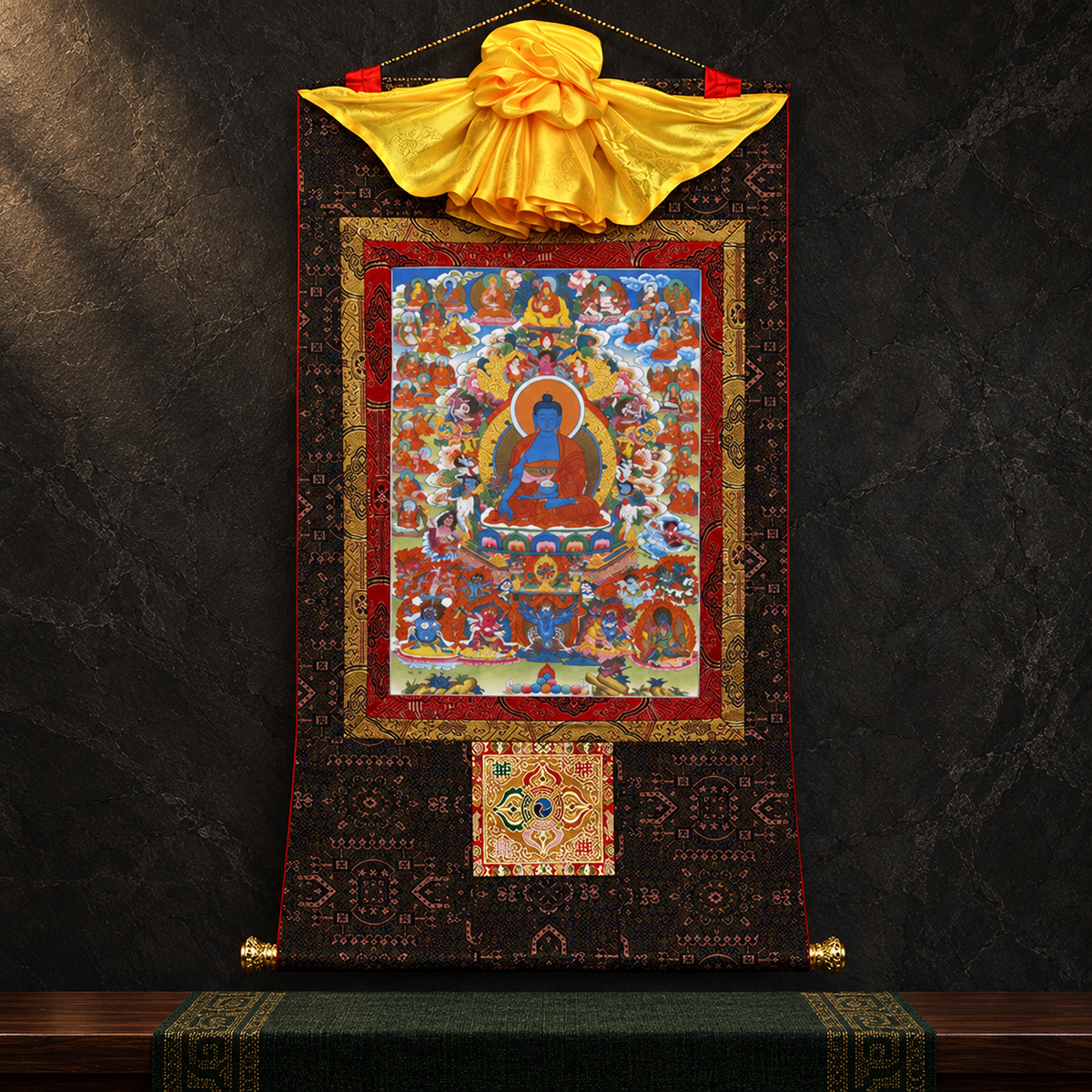
A thangka is a Tibetan Buddhist image painted or stitched on cloth and mounted in a silk brocade border, so it can be rolled up and carried. Thangkas serve as a focus for meditation, hang in shrines and have long been used to teach. If you are buying one for your home, here is what to look at.
Types of thangka
- Hand-painted: painted with mineral and plant pigments on primed cotton, often with gold detail. Fine pieces take weeks or months, and the price follows the artist's skill and time.
- Printed: a reproduction printed on canvas or cloth, sometimes with hand-applied gold. Affordable, and a good choice for a first shrine or for travelling.
- Embroidered and appliqué: the image is stitched in thread or built from pieces of silk. Rich in texture and colour, and durable.
A seller should tell you clearly which type you are buying.
Choosing the deity
As with statues, choose a figure that connects with your practice, your teacher's advice or what you want to cultivate: Shakyamuni for the path itself, Chenrezig for compassion, Green Tara for swift help, White Tara for long life, Medicine Buddha for healing. Our guide on how to choose a Buddha statue covers the main figures, and the same choices apply to thangkas.
Thangkas in our shop
Embroidered and mounted thangka wall hangings, some in several sizes. See all thangkas.


Size
Measure your wall first. Sizes are usually given for the full mounted length, including the brocade border, which can be about twice the size of the image itself. For a small shrine or a narrow wall, 60 to 90 cm (24 to 35 in) overall works well; for a main wall or a meditation room, 110 to 150 cm (43 to 59 in); larger pieces suit temples and big rooms. Hang it so the deity's face is at or slightly above eye level.
Where and how to hang it
- Choose a clean, respectful place, not a bathroom and not at floor level.
- Keep it out of direct sunlight, which fades pigments and silk.
- Avoid damp walls and kitchens, as humidity and smoke damage cloth. Keep incense and butter lamps a little to the side rather than directly below.
- Many thangkas have a thin silk veil. Roll it up during practice and let it down to protect the image.
Care and storage
Dust gently with a soft, dry brush; never wash or iron a thangka. To store it, roll it loosely from the bottom around the lower rod rather than folding it, wrap it in clean cloth and keep it somewhere dry. When you hang a new thangka on your shrine, you can offer a khata over it; see how to choose a khata.


