

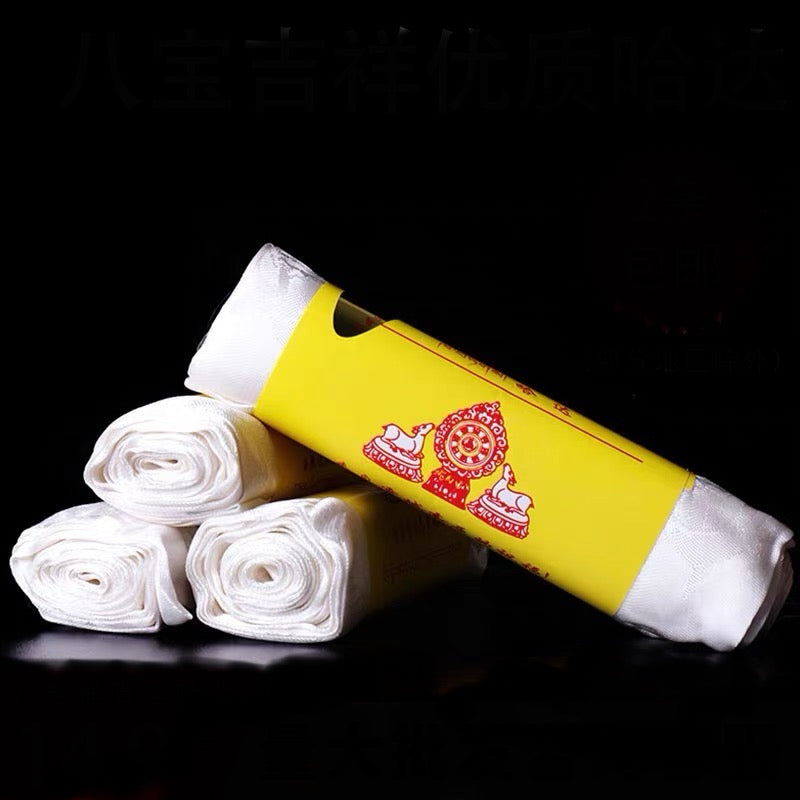
A khata is the white scarf offered in Tibetan culture as a greeting, a blessing or a mark of respect. We cover its meaning in Khata: The Scarf of Blessings. This guide is the practical side: which colour, which material, what size and how to offer one.
Which colour?
- White: by far the most common. It stands for a pure, sincere intention and suits almost every occasion: greeting guests, visiting a lama, weddings, farewells, graduations.
- Five colours (blue, white, red, green, yellow): linked to the five elements, the same colours as prayer flags. Usually kept for special occasions and offerings at temples, shrines or statues rather than everyday greetings.
- Single colours other than white: yellow, red, green or blue khatas are often used on a shrine, to dress a statue or thangka, or to match a particular deity. If you are unsure, choose white.
Silk or polyester?
Silk khatas have a soft drape and a subtle sheen, and are the choice for formal occasions, a lama or a gift you want to keep. Polyester is less expensive and more durable, and works well when you need several for a ceremony or a group. Many khatas are woven or embroidered with the eight auspicious symbols or a mantra.
Khatas in our shop
White and five-colour silk khatas and embroidered khatas, all with the eight auspicious symbols. See all khatas.


What size?
Khatas range from short scarves of about 1.5 m (5 ft) to long ones of 3 m (10 ft) or more. A longer khata is generally a more formal gesture. For a lama, a ceremony or a large statue, choose a long one; for greeting friends or a small shrine, a shorter one is fine. Very long khatas are also easier to drape over a large statue or thangka.
How to fold and offer a khata
- Fold it lengthwise so the open edge faces the person you are offering it to. The folded edge faces you.
- Hold it across both palms, with your hands at about shoulder height.
- To a lama or an elder: bow slightly and hold it out. The lama may bless it and place it back around your neck.
- To a friend or guest: place it gently around their neck.
- To a statue or shrine: lay it in front of the image or drape it over the statue.
Keeping a khata
A khata you received is usually kept rather than thrown away. Fold it and store it somewhere clean, hang it near your shrine, or drape it over a picture of your teacher. Keep it off the floor. When it becomes worn, you can burn it or leave it somewhere clean and high.


