

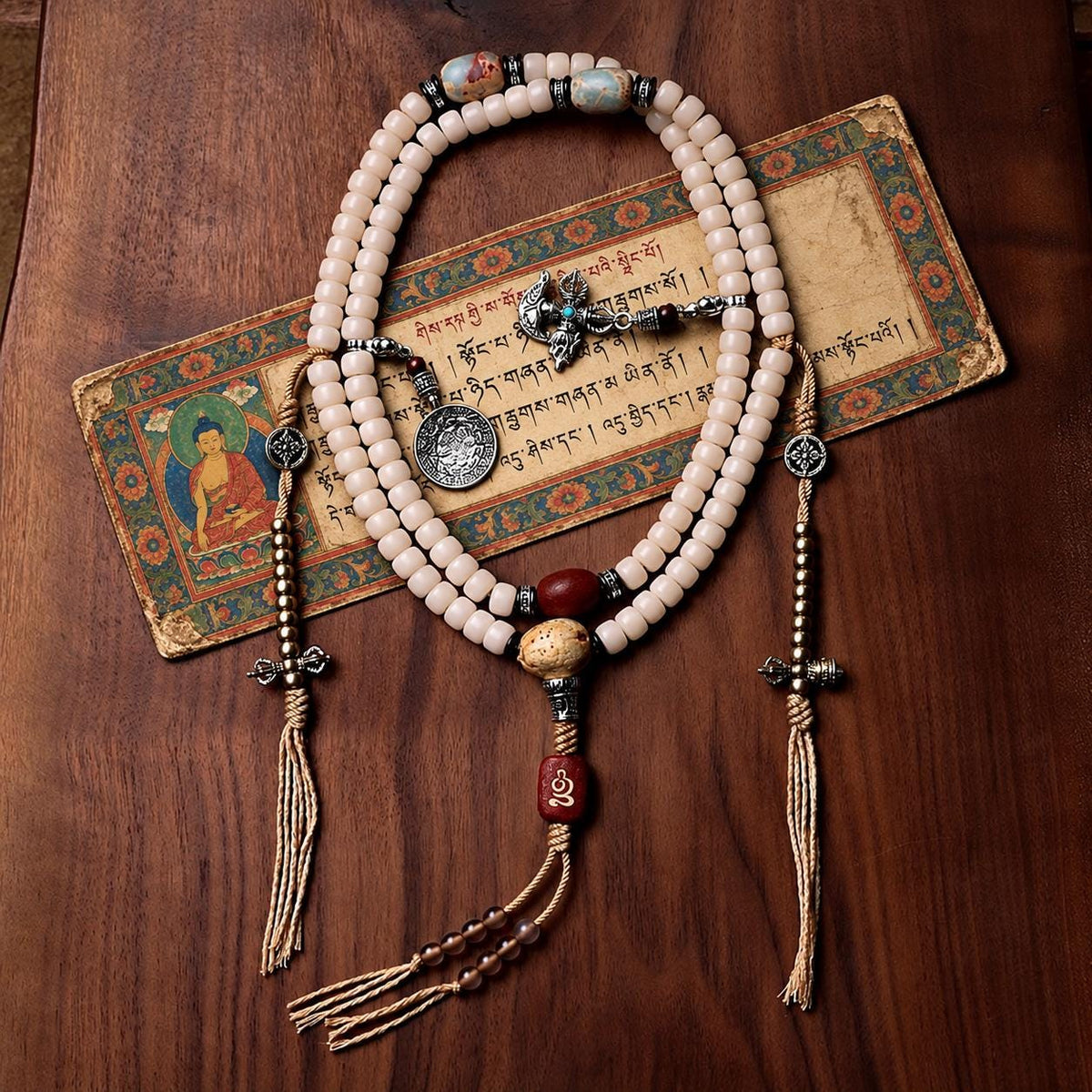
Two malas can both have 108 beads and still be very different objects. The difference is bead diameter. It decides how long the mala is, how heavy it feels, and whether you wear it on the wrist or around the neck.
How size changes length
A simple way to estimate length is to multiply the bead diameter by 108. This gives the length of the beads alone, before knots, spacers and the guru bead are added.
- 6mm: about 65 cm of beads
- 8mm: about 86 cm of beads
- 10mm: about 108 cm of beads
A knotted mala is longer than these figures, because each knot adds a little space between beads.
6mm: light and easy to wear
Small beads make a light, compact mala. It wraps around most wrists about four times and sits flat under a sleeve. It is a good choice if you want to wear your mala all day, or if you have small hands. The beads are finer to move between the fingers, so counting takes a little more attention.
8mm: the all-round size
8mm is the size most people find comfortable for both counting and wearing. Each bead is easy to feel and move with the thumb. The mala can be worn around the neck or wrapped around the wrist about five times, though it will look fuller than a 6mm mala.
10mm and larger: for the hand and the neck
Large beads are the easiest to grip and count, which many people prefer for longer sessions. The mala is noticeably longer and heavier. It is usually held in the hand, worn around the neck or kept on the altar, and is too bulky for most people to wrap as a bracelet.
Three sizes from our collection
108-bead malas in small, medium and large beads. See all Tibetan malas.


How to decide
- Mostly worn as a bracelet: 6mm.
- One mala for practice and wearing: 8mm.
- Mostly used in the hand at home: 10mm or larger.
Material matters too. Stone beads are heavier than wood, seed or bone at the same size, so a stone mala often feels best one size smaller.
If you are unsure, measure a bracelet or necklace you already wear comfortably and compare it with the lengths above.


