

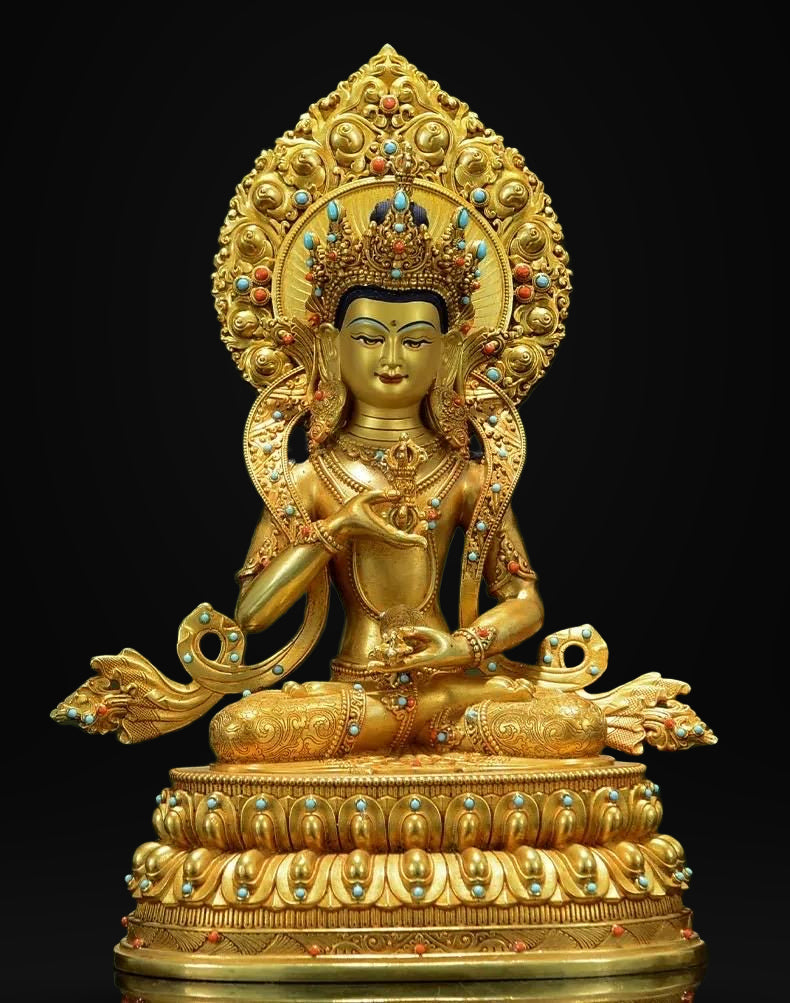
Vajrasattva (Tibetan: Dorje Sempa) is the buddha most closely linked with purification. His practice, reciting the hundred-syllable mantra while visualising purifying nectar, is part of the preliminaries (ngöndro) in all the main Tibetan schools, and many people keep his image on their shrine even without a formal practice.
What he represents
Vajrasattva embodies the idea that negative actions and their imprints can be purified. The practice works through four elements: regret for what was done, reliance on Vajrasattva, the purifying practice itself and a resolve not to repeat the action. His name means "diamond being", pointing to the pure, unchanging nature of mind.
How to recognise him
- Colour: white, like a snow mountain or crystal.
- Posture: seated in full lotus, in the ornaments and silks of a sambhogakaya buddha.
- Right hand: holds a vajra at the heart.
- Left hand: holds a bell at the hip, mouth facing up.
- He is sometimes shown in union with his consort; in single form he looks peaceful and youthful.
The vajra and bell are the clearest way to tell him apart from other white, seated figures such as White Tara or four-armed Chenrezig.
Mantras
The short mantra is Om Vajrasattva Hum. The main practice uses the hundred-syllable mantra, which is best learned from a teacher or a reliable practice text.
Vajrasattva in our shop
Gilded copper statues and a hand-painted tsa tsa. See all Vajrasattva items.


Choosing a Vajrasattva statue
- Check the details: a clear vajra at the heart and a bell at the hip, a calm face and evenly finished hands.
- Material: gilded copper gives a bright, lasting finish; plain brass or copper is more affordable. Our guide to Buddha statue materials compares them.
- Size: 15 to 20 cm (6 to 8 in) suits a home shrine; a tsa tsa or pendant is good for travel or for keeping close.
- Placement: Vajrasattva usually sits beside or slightly below your main image, such as Shakyamuni or your teacher. See how to choose a Buddha statue for placement tips.


