

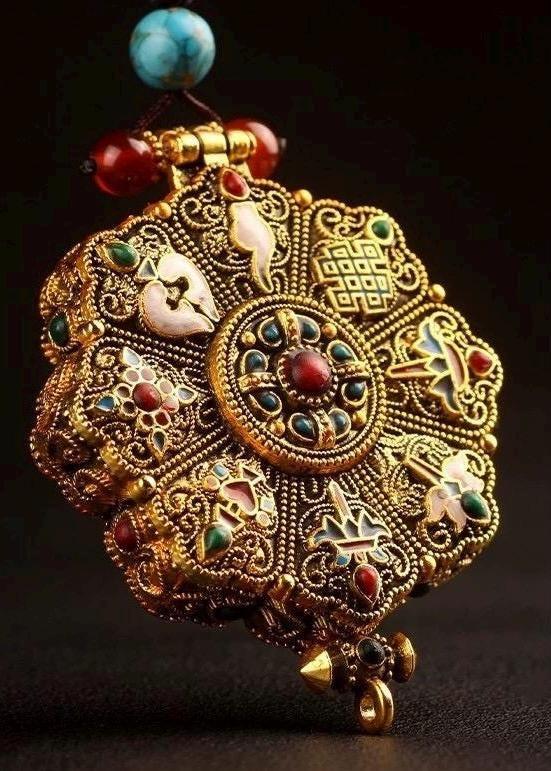
A gau (ga'u) is a small portable shrine. Tibetans have long carried one on a cord around the neck or in a bag, especially when travelling, so that a blessed object is always close by.
What goes inside
Traditionally a gau holds things connected to one's practice or a teacher: a printed or handwritten prayer or mantra, a small image, a tsa tsa, or an object blessed by a lama. Paper contents are often rolled and wrapped in a piece of cloth. What you place inside is personal, and many people ask a teacher or temple for something suitable.
Main styles
- Window gau: a glass or clear front shows a small image or figure inside.
- Closed gau: a solid box, often decorated with a mantra, lotus or the eight auspicious symbols. The contents stay hidden.
- Shrine shape: an arched or temple-like outline, sometimes holding a tiny statue.
- Round or square: simpler shapes that sit flat against the chest.
Gau boxes from our collection
Closed, shrine-style and openable gau pendants. See all gau boxes.


How to choose
- Size: around 3 to 5 cm (1.2 to 2 in) is comfortable for daily wear. Larger boxes suit an altar, a bag or a car.
- Material: brass and copper are durable and warm in tone. Silver is lighter in colour and often combined with turquoise or coral.
- Opening: check whether the box opens with a hinge, a sliding back or a screw cap, and whether it closes securely if you plan to keep something inside.
- Weight: solid metal boxes can be heavy. Hold the weight in mind if you will wear it every day.
Wearing and keeping it
A gau is usually worn on a cord or chain close to the chest. It is treated with respect: kept clean, not placed on the floor, and taken off before sleeping or bathing if it contains paper or clay items. When not worn, it can rest on the altar.


