

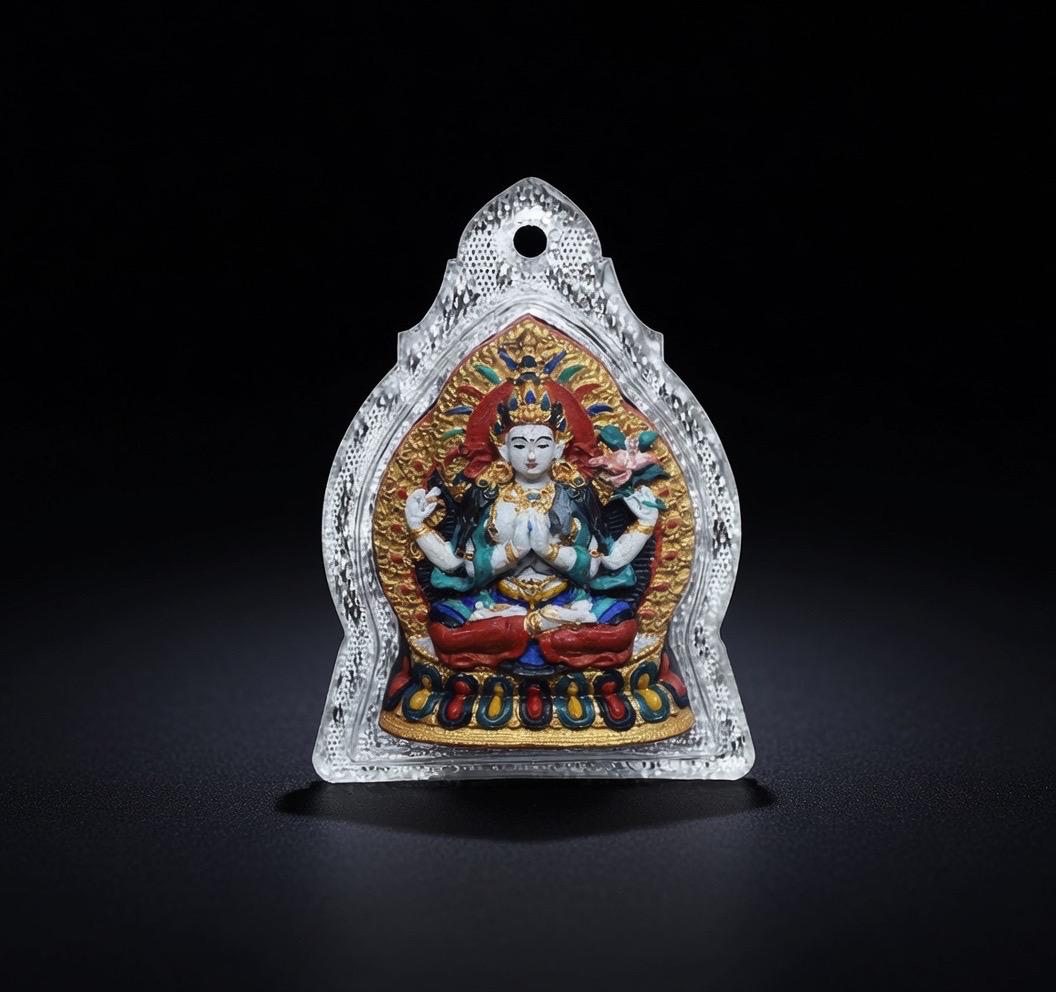
A tsa tsa is a small image pressed from clay in a carved mould. It may show a buddha, a deity, a stupa or a mantra. Making tsa tsas is a traditional merit practice in Tibetan Buddhism, and they are placed in stupas, statues, shrines and holy places, as well as kept at home.
How tsa tsas are made
Clay is pressed into the mould, released and left to dry. Depending on the purpose, the clay may be mixed with other substances, such as herbal or medicinal powders, or ashes from a cremation. Many are blessed after they are made. Some are then painted by hand with gold and coloured pigments.
Common forms
- Unpainted: the natural colour of the clay, showing the moulded detail.
- Hand-painted: coloured like a miniature thangka, usually finished with gold.
- In a case or gau: set in a metal or clear case so it can be worn as a pendant.
- Altar pieces: larger tsa tsas meant to stand on a shrine.
Tsa tsas from our collection
Altar tsa tsas and hand-painted tsa tsa pendants. See all tsa tsas.


How to choose
Start with the figure. As with a statue, many people choose one connected to their practice or teacher. Then decide whether you want to wear it or place it on an altar. For daily wear, a tsa tsa in a sealed case is the practical choice, because bare clay is fragile.
Keeping and displaying
- Keep tsa tsas dry. Clay softens and painted surfaces can be damaged by water.
- On an altar, stand a tsa tsa upright on a small stand or in a frame, at or above the level of other offerings.
- Handle painted tsa tsas by the edges, not the face.
- If one breaks, it is not thrown away with household rubbish. Many people return the pieces to a clean, high place, or take them to a stupa or temple.


