

Tibetan pendants are small, but each design carries a specific meaning. If you are choosing one for yourself or as a gift, it helps to know what the main designs stand for and how they differ in size, weight and metal. This guide covers the designs we are asked about most.
The main designs and what they mean
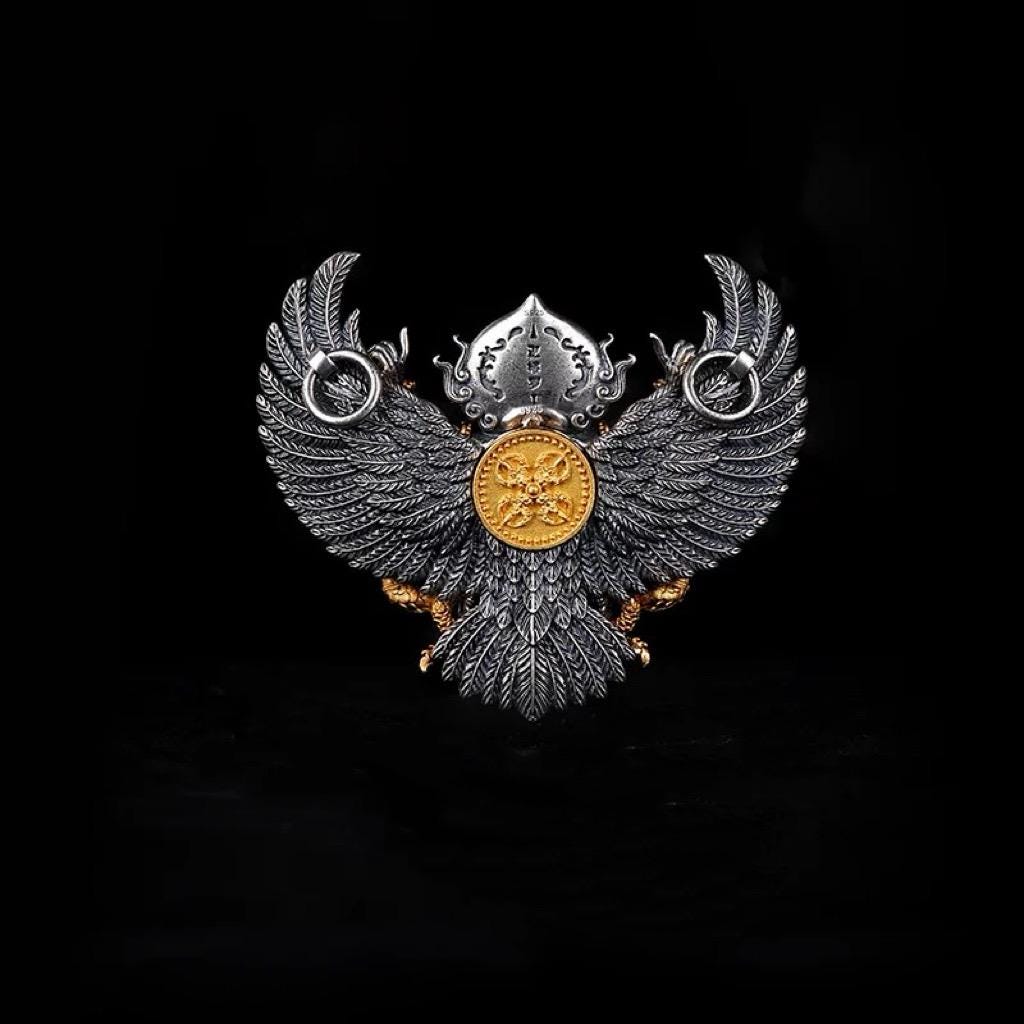
Garuda
Garuda is a great mythical bird, shown with spread wings, horns and often a snake in its beak. In Tibetan tradition it is commonly explained as a symbol of fearless wisdom and as a protector against harmful influences. Garuda pendants tend to be bold and detailed.
Vajra (dorje)
The vajra, called dorje in Tibetan, is the best-known symbol of Tibetan Buddhism. It is usually explained as standing for what is indestructible, like a diamond. As a pendant it is slim, balanced and easy to wear every day.
Crossed vajra
Two vajras crossed at the centre form the double or crossed vajra. It is commonly associated with stability and a firm foundation. Its square outline sits flat on the chest.
Phurba (kila)
The phurba is a three-sided ritual peg. The common explanation is that it pins down obstacles; it is not a weapon. Phurba pendants are long and narrow. Our phurba guide explains the full-size ritual object.
Deity pendants
Some pendants show a figure such as Avalokiteshvara (Chenrezig), associated with compassion, or Manjushri, associated with wisdom. People often choose the figure they already feel a connection with.
These are traditional associations, not promises of any personal effect.
Amulet pendants in our shop
Silver and brass designs from the Amulet collection.


Size and weight
Most of our pendants measure between 3 cm (1.2 in) and 7.5 cm (2.95 in) on the longest side.
- Under 4 cm (1.6 in): light and discreet; sits under a shirt collar.
- 4–6 cm (1.6–2.4 in): the usual statement size, worn over clothing.
- Over 6 cm (2.4 in): long designs such as the phurba; best on a longer cord so the tip rests on the chest and not the throat.
Check the weight as well. A solid silver pendant can weigh close to 40 g (1.4 oz), which you will notice over a full day.
Silver, brass or copper
- 925 sterling silver holds fine detail and can be polished back when it tarnishes.
- Brass is warm in colour and lower in price. It darkens with wear and can leave a mark on skin in humid weather.
- Copper with silver-tone detailing gives contrast between raised and recessed areas.
Cord or chain
Check what the listing includes: some pendants come with a chain or cord, others are sold alone. A knotted cord is traditional, adjustable and quiet against the skin. A chain is more durable; match its strength to the weight of the pendant.
Wearing and care
A common custom is to wear a sacred pendant above the waist and to keep it off the floor when it is taken off. Remove it before bathing, swimming or sleeping. Wipe it with a soft dry cloth and store it apart from other jewellery.
If you want a pendant that can hold something inside, see our guide to the gau box.


